
Facebook ads vs TikTok ads for music teachers
Start with Meta. That’s the short answer. If you’re a music teacher in the UK with a modest test budget, put most of your budget on Meta (Facebook and Instagram) and a smaller portion on TikTok. Meta’s pixel-driven retargeting and life-event targeting make it far more reliable for converting parents and adult learners into actual enquiries. TikTok gets you attention fast, but private lessons are a considered purchase — people don’t book a guitar teacher the same way they buy a lip gloss.
Here’s what that split looks like in practice:
Meta: Lead generation campaigns using Facebook Lead Ads or a landing page with the Meta Pixel installed. Expect enquiries within 2–3 weeks on a consistent budget.
TikTok: Short-form awareness clips showing your teaching style, student progress, or a quick lesson tip. Expect reach and profile growth, not immediate bookings.
Combined goal: TikTok builds familiarity; Meta closes the loop. Musicteacherpros uses exactly this funnel structure with teachers across the UK.
Table of Contents
How do Facebook ads vs TikTok ads compare for music teaching?
How do you set up tracking and stay GDPR-compliant in the UK?
How Musicteacherpros used cross-channel ads to generate student leads
How do Facebook ads vs TikTok ads compare for music teaching?
DimensionMeta (Facebook & Instagram)TikTokReach & demographicsBroad age mix: parents, adults, older learnersSkews younger; Gen Z and Millennials dominateAd formatsLead forms, carousels, Stories, video, static imageIn-Feed video, Spark Ads, TopViewTargeting precisionLife events, interests, behaviours, lookalikes, Meta Pixel retargetingInterest and behaviour-based; algorithmic deliveryCost benchmarksCPM ~£5–£12CPM ~£5–£8Conversion & retargetingStrong: pixel, Conversions API, lookalikes, custom audiencesDeveloping: TikTok pixel improving but less matureLearning curveModerate; Ads Manager is detailed but well-documentedModerate; creative demands are the bigger challengeBest campaign typesLead forms, booking-page conversions, retargetingAwareness, engagement, top-of-funnel videoTimeline to results2–4 weeks to first enquiries4–8 weeks; brand recognition builds gradually
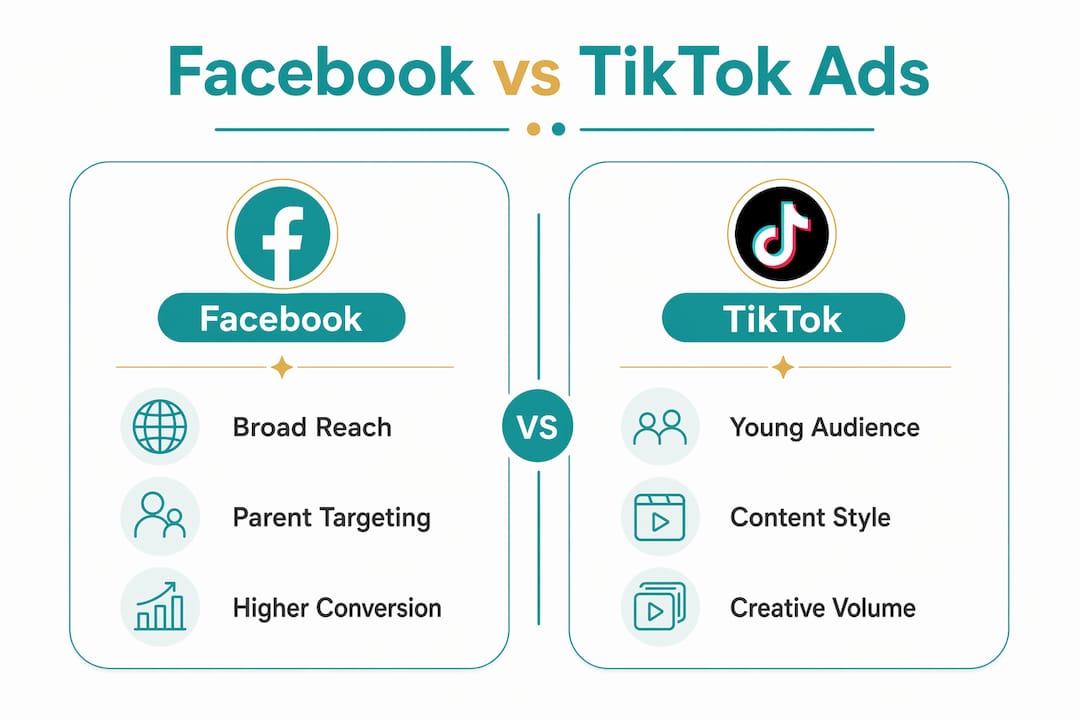
Meta’s behavioural and life-event data gives it a structural advantage for considered purchases like recurring lessons. TikTok wins on raw reach per pound spent, but conversion rates on TikTok tend to be lower than on Facebook — a gap that matters enormously when you’re chasing booked lessons, not views.
What creative actually works on each platform?
Meta: speak to the parent, not the pupil
Your Facebook ad doesn’t need to be cinematic. A simple image or short video of a child at a piano with copy like “Piano lessons in [Town] — spaces available this September” works well. Target parents aged 28–45 within a 10-mile radius, add life-event targeting for “new parents” or “recently moved,” and use a Lead Ad form so they never leave Facebook. For adult learners, a direct message campaign asking “Always wanted to learn guitar?” with a free trial lesson offer converts reliably.
TikTok: show, don’t sell
On TikTok, the ad has to feel like content. A 15-second clip of a student playing their first recognisable melody, captioned "Week 6 of lessons ", will outperform any polished promotional video. Use trending audio where it fits naturally. Short-form video promotion works best when it leads with the result — the student’s progress — rather than your credentials.
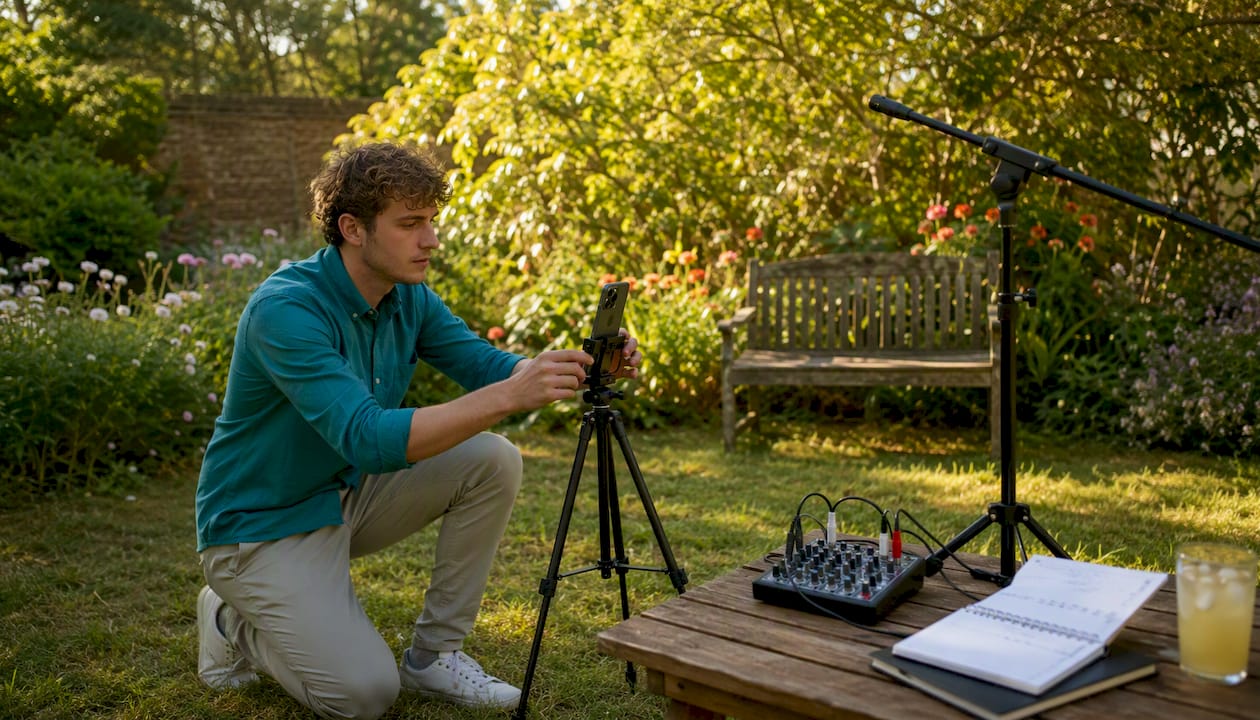
Pro Tip: Film one 60-second “teaching moment” video, then cut it three ways: a 15-second TikTok clip, a 30-second Instagram Reel, and a 60-second Facebook video ad. Same shoot, three native assets.
Top TikTok performers plan 3–5 new creatives per week per ad group to avoid fatigue. As a solo teacher, aim for two fresh clips per week minimum — your phone camera is enough.
How do you set up tracking and stay GDPR-compliant in the UK?
Getting the tracking right is non-negotiable. Without it, you’re flying blind on which ad actually produced the enquiry.
ToolWhat it doesSetup priorityMeta PixelTracks website visits, form submissions, and purchasesHigh — install before running any Meta adMeta Conversions API (CAPI)Server-side tracking; fills gaps left by ad blockers and iOS privacy changesMedium — add once Pixel is workingTikTok Pixel / EventsTracks TikTok-driven visits and conversions on your siteHigh — install before TikTok campaignsUTM parametersTags every ad link so Google Analytics shows which campaign sent trafficHigh — use on every ad URLTag Assistant (Google)Verifies Pixel and tag firing in real timeUse during setup to confirm everything fires
UK compliance note: Under UK GDPR (enforced by the ICO), you must obtain explicit consent before dropping tracking cookies. Use a cookie consent banner (tools like Cookiebot or CookieYes work well) that lets visitors accept or decline non-essential cookies. Store consent records. Your lead capture form must include a clear privacy notice and an unticked opt-in box for marketing emails. The ICO’s guidance on cookies is the primary reference — check ico.org.uk for current requirements.
Statistic callout: Facebook’s Conversions API can recover attribution data lost to browser restrictions, making it especially valuable post-iOS 14 for UK advertisers running lead generation.
What budget and KPIs should you plan for?
Starter budgets
Solo teacher testing (monthly): a modest budget split with most on Meta and some on TikTok.
Music school scaling (monthly): a larger budget with Meta taking the majority share and TikTok funding awareness and creative testing.
Absolute minimum test: a small daily budget on Meta allows the algorithm sufficient data to optimise campaigns.
KPIs by funnel stage
Top of funnel (awareness): aim for low CPM on both platforms and track impressions and video views.
Middle of funnel (consideration): keep cost per link click reasonable and monitor landing page engagement.
Bottom of funnel (conversion): target cost per lead suitable for local lesson enquiries, aiming for acquisition costs aligned with lesson pricing.
Timeline
Weeks 1–2: Pixel fires correctly; first impressions and clicks arrive. No leads yet — normal.
Weeks 3–4: Lead form submissions begin. Expect 2–8 leads at this budget level.
Month 2: Enough data to identify the best-performing ad. Pause the weaker one; increase budget on the winner by 20%.
Month 3+: Introduce retargeting audiences (website visitors, video viewers). CPL typically drops as warm audiences convert more cheaply.
A campaign playbook you can copy right now
Step 1 — TikTok awareness (top of funnel) Objective: Video Views or Reach. Audience: broad, UK-based, aged 13–35 (for teen/young adult learners) or 25–45 (for parent-facing). Creative: two native-style clips showing a lesson moment or student result. Budget: 30% of your total monthly spend.
Step 2 — Meta retargeting (middle of funnel) Objective: Traffic or Engagement. Audience: custom audience of TikTok video viewers (exported via email list) plus website visitors from the past 30 days. Creative: a short testimonial-style video or a “spaces available” carousel. Budget: 20% of total spend.
Step 3 — Meta conversion (bottom of funnel) Objective: Leads or Conversions. Audience: lookalike of your existing students (upload a customer list), plus interest targeting for “music lessons,” “piano,” “guitar” within your local area. Creative: a direct Lead Ad with three fields (name, email, phone) and a clear offer (“Book a free trial lesson”). Budget: 50% of total spend.
Pro Tip: Run an A/B test on your Meta Lead Ad headline. Test “Free trial piano lesson in [Town]” against “[Town]'s most-loved piano teacher — book now.” Run each for seven days with equal budget before picking a winner.
Meta Advantage+ campaigns can reduce manual optimisation once you’re generating consistent weekly leads — but start with manual targeting until you have at least 10–15 conversions per week.
When should you choose TikTok, Meta, or both?
“I teach children locally (ages 5–14)” → Meta first. Parents are on Facebook. Target by postcode, parenting interests, and school-age life events.
“I teach teenagers or young adults” → Both. TikTok for discovery; Meta for follow-up retargeting once they’ve visited your site.
“I sell online courses to adults” → Meta primary (60–75% of budget). Considered, higher-value services convert more reliably through Meta’s retargeting depth.
“I want to build a following and grow brand awareness” → TikTok primary. Lower CPM means more eyeballs per pound.
“I have limited time for content creation” → Meta only. One well-targeted Lead Ad can run for weeks without a new creative.
“I have a creative pipeline and can post 2+ videos per week” → Run both. The funnel works best when TikTok feeds warm audiences into Meta retargeting.
The resource trade-off is real: TikTok demands creative time; Meta demands targeting precision. Pick the constraint you can manage.
How Musicteacherpros used cross-channel ads to generate student leads
The approach Musicteacherpros deploys for music educators follows the same funnel logic outlined above: TikTok awareness content drives profile visits and website traffic, which the Meta Pixel captures. Meta then retargets those warm visitors with a Lead Ad, and an automated follow-up sequence (email plus SMS) converts the enquiry into a booked lesson.
The system has supported over 50,000 students connecting with music teachers through this model. The key shift most teachers report after optimisation is moving from chasing views to tracking CPL. Once a teacher knows their cost per lead is £12 and their average student stays for six months, the maths of paid advertising stops feeling like a gamble.
As media-buying analyst Adligator notes, for considered purchases, conversion quality matters more than cost per click. A £0.50 TikTok click that never books is worth less than a £1.50 Meta click that converts at 9%.
Key takeaways
Meta (Facebook and Instagram) is the primary channel for music teachers seeking reliable student enquiries; TikTok works best as a top-of-funnel awareness layer feeding warm audiences into Meta retargeting.
PointDetailsStart with MetaPut most of your test budget on Meta Lead Ads for predictable enquiries within 2–3 weeks.Use TikTok for reachAllocate a portion to TikTok awareness clips; expect brand familiarity, not immediate bookings.Install tracking firstMeta Pixel and TikTok Pixel must be live before any campaign launches; add UTM tags to every link.Track CPL, not viewsTarget a cost per lead of £5–£20 for local lesson enquiries; vanity metrics don’t pay the bills.MusicteacherprosOffers pre-built ad campaigns, automated lead capture, and coaching to run this exact funnel for you.
The platform debate misses the bigger point
Most music teachers I speak with are asking the wrong question. “Should I use Facebook or TikTok?” is a bit like asking whether you need a front door or a window — you need both, but they do different jobs. The front door (Meta) is where students actually walk in. The window (TikTok) is where they first notice the house.
What I’ve seen trip teachers up repeatedly is obsessing over creative quality on TikTok while neglecting the follow-up system on Meta. A viral clip that sends 500 people to your website means nothing if the Meta Pixel isn’t installed, there’s no retargeting campaign waiting, and no one follows up with the three people who did fill in a form. Tracking and follow-up are the unglamorous gears that actually turn attention into income.
The other mistake is waiting until the creative feels “good enough.” Your first TikTok ad will be imperfect. Run it anyway. The data it generates is worth more than the embarrassment of a slightly wobbly camera angle.
Musicteacherpros makes this whole system work for you
Running a dual-platform funnel sounds straightforward on paper. In practice, most teachers run out of time before they’ve finished setting up the pixel. That’s exactly the gap Musicteacherpros fills.
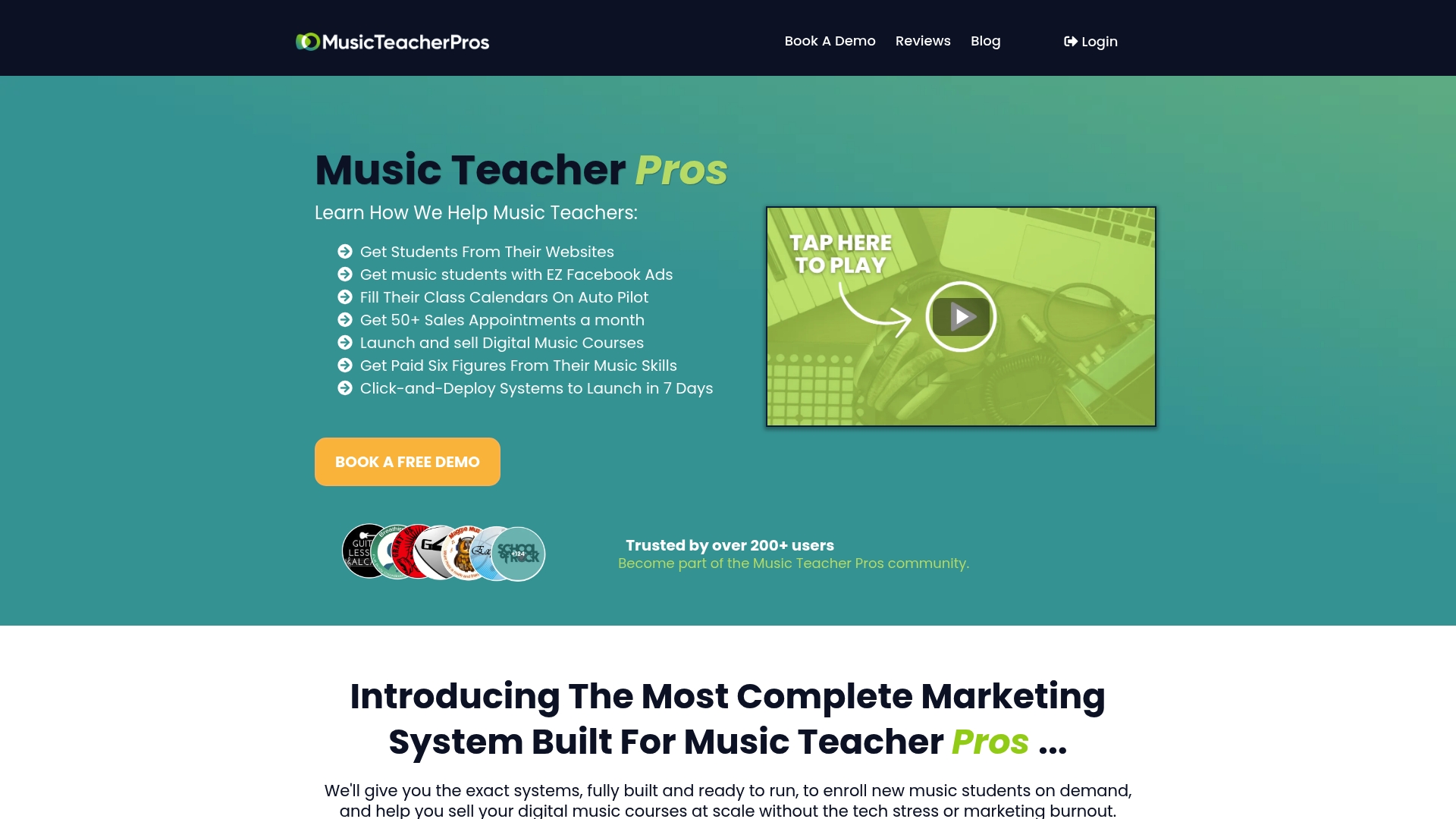
Musicteacherpros gives music educators pre-built Facebook ad campaigns, automated lead capture and follow-up sequences, SEO-ready websites, and ongoing coaching — all in one subscription. You don’t need to figure out Ads Manager from scratch or produce a new TikTok every other day. The ad templates are ready; the automation handles the follow-up; the coaching keeps you on track.
Over 50,000 students have been connected with teachers through this system. If you’d rather spend your time teaching than troubleshooting ad accounts, book a discovery call and see how the platform works for your specific situation.
Useful sources
Adligator: TikTok Ads vs Facebook Ads ROAS Comparison — best source for media-buying strategy, budget split rationale, and ROAS context for considered purchases.
respond.io: TikTok Ads vs Facebook Ads — clear CPM, CPC, CTR, and CVR benchmarks; useful for cost comparison tables.
Triple Whale: TikTok Ads vs Facebook Ads — strong on targeting differences and behavioural data advantages for Meta.
WordStream: Facebook vs TikTok Ads — audience demographic data; useful for justifying parent-facing Meta targeting.
TrueMargin: Meta Ads vs TikTok Ads Cost Compared — CPM/ROAS benchmarks and Advantage+ campaign evidence.
ICO: Cookie and tracking guidance — primary UK authority on GDPR, cookie consent, and data capture compliance for advertisers.
FAQ
Which platform is better for attracting local music students?
Meta (Facebook and Instagram) is generally better for local student acquisition. Its postcode targeting, life-event filters, and Lead Ad format make it easier to reach parents and adult learners in a specific area.
How much should a music teacher spend on ads each month?
A solo teacher can test effectively on a modest monthly budget, with most spend on Meta and some on TikTok. Scale once you have a confirmed cost per lead below £20.
Do I need the Meta Pixel before running Facebook ads?
Yes. Install the Meta Pixel on your website before launching any campaign — it’s what enables retargeting, lookalike audiences, and accurate conversion tracking.
Is TikTok advertising worth it for music teachers in the UK?
TikTok works well for awareness and reaching younger learners or their parents, but its conversion rates tend to be lower than Facebook’s. Use it to build familiarity, not as your primary lead source.
What is the fastest way to get student enquiries from paid social?
Run a Meta Lead Ad targeting parents within 10 miles of your location, with a free trial lesson offer. With a £5/day budget and the Meta Pixel installed, most teachers see their first enquiries within 2–3 weeks.